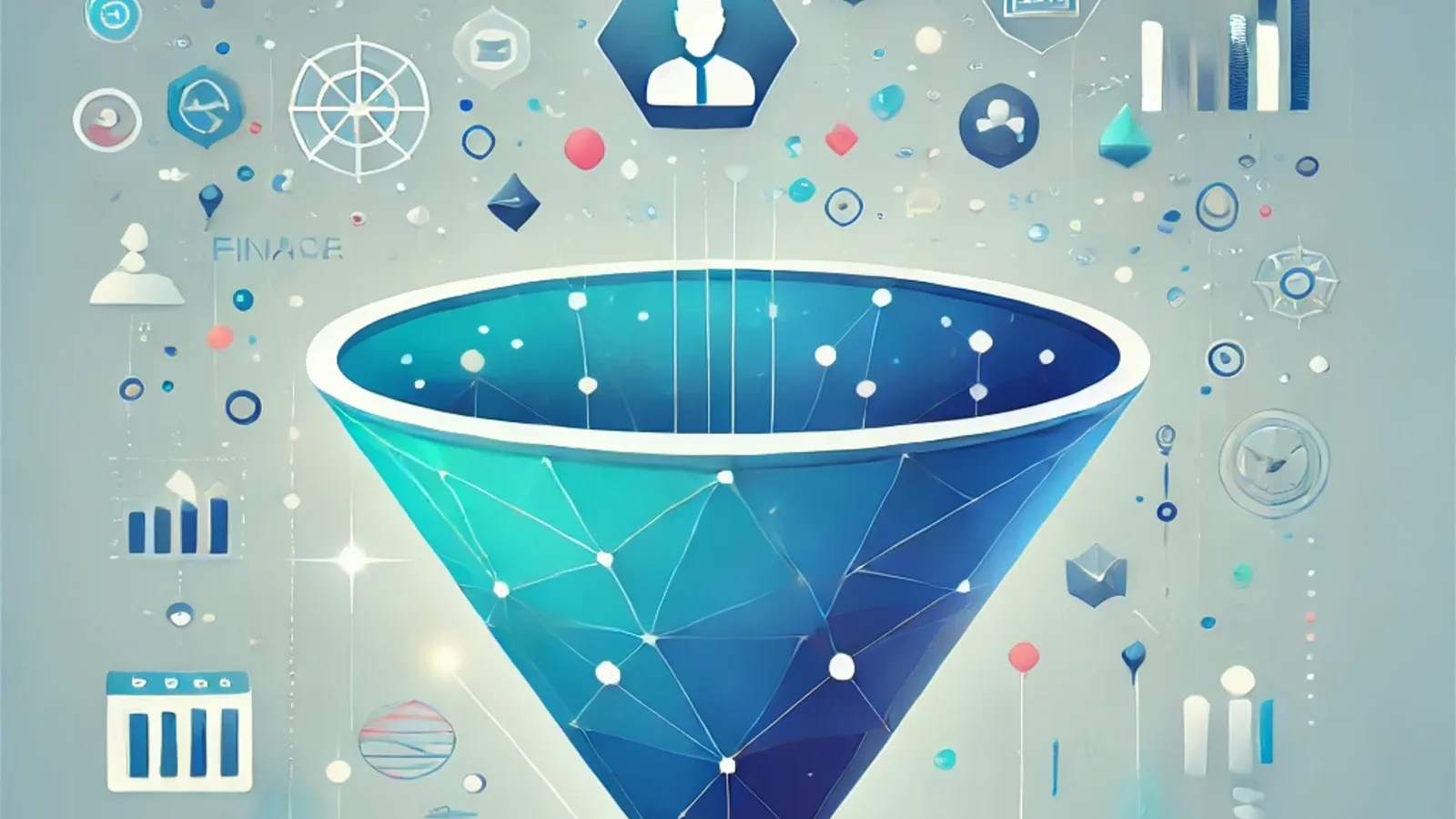
From first contact to long-term relationship, funnels and automation work together to turn a simple visit into real product usage and, in some cases, a lasting customer relationship.
What a funnel is
A funnel describes the path a user follows from first discovering the product to the final conversion. Many people become aware of the service, some visit the platform, some register, and only part of them convert.
At every step the number of users decreases. Not because the system is failing, but because it is natural that not everyone continues until the end.
The funnel exists precisely to represent these stages and to understand what happens between one step and the next.
The main stages of the journey
Although every product has different characteristics, many digital funnels share a similar structure: discovery, visit, registration, product usage, and conversion.
Users may arrive from search, social content, campaigns, or word of mouth. If interest grows, they explore the product, register, and begin to experience its value.
This journey may look simple, but it is actually one of the central points in digital product design.
Finding critical points in the funnel
One reason funnels are so useful is that they reveal where the process breaks down. Do many users visit the site but never register? Start checkout but never finish? Sign up but never really use the product?
Each of these situations points to a critical area. Maybe the product value is unclear, the registration process is too complex, or the onboarding does not guide the first steps well enough.
The funnel becomes a tool for identifying where to intervene and improve the experience.
Funnels and product development
Funnels are often treated as a marketing topic only. In reality, they are tightly connected to product development.
The clarity of flows, simplicity of the interface, system performance, and consistency of the user experience all directly affect how people move through the platform.
If the system is slow, steps are confusing, or the interface does not make the next action clear, many users will leave before conversion.
The role of automation
After conversion, the relationship with the user does not stop. This is where emails, notifications, and automated messages help maintain contact and support the user over time.
Automation makes it possible to trigger communication based on behavior: a welcome sequence after sign-up, a reminder if a process is interrupted, or targeted content to suggest new features.
Marketing automation tools such as ActiveCampaign make these flows manageable in a structured way without constant manual intervention.
Funnels and automation work together
Funnels help understand how users move through different phases of the product and where they face friction. Automation makes it possible to intervene at those exact moments with relevant communication.
If many users register but do not start using the product right away, an email sequence can guide their first steps. If a process is abandoned halfway, an automated reminder can help bring them back.
In this way, the system does not just wait for user actions. It actively supports the journey.
Conclusion
In successful digital products, growth does not depend only on traffic. It depends on understanding the user journey, improving it, and building a relationship that continues over time.
Keep reading