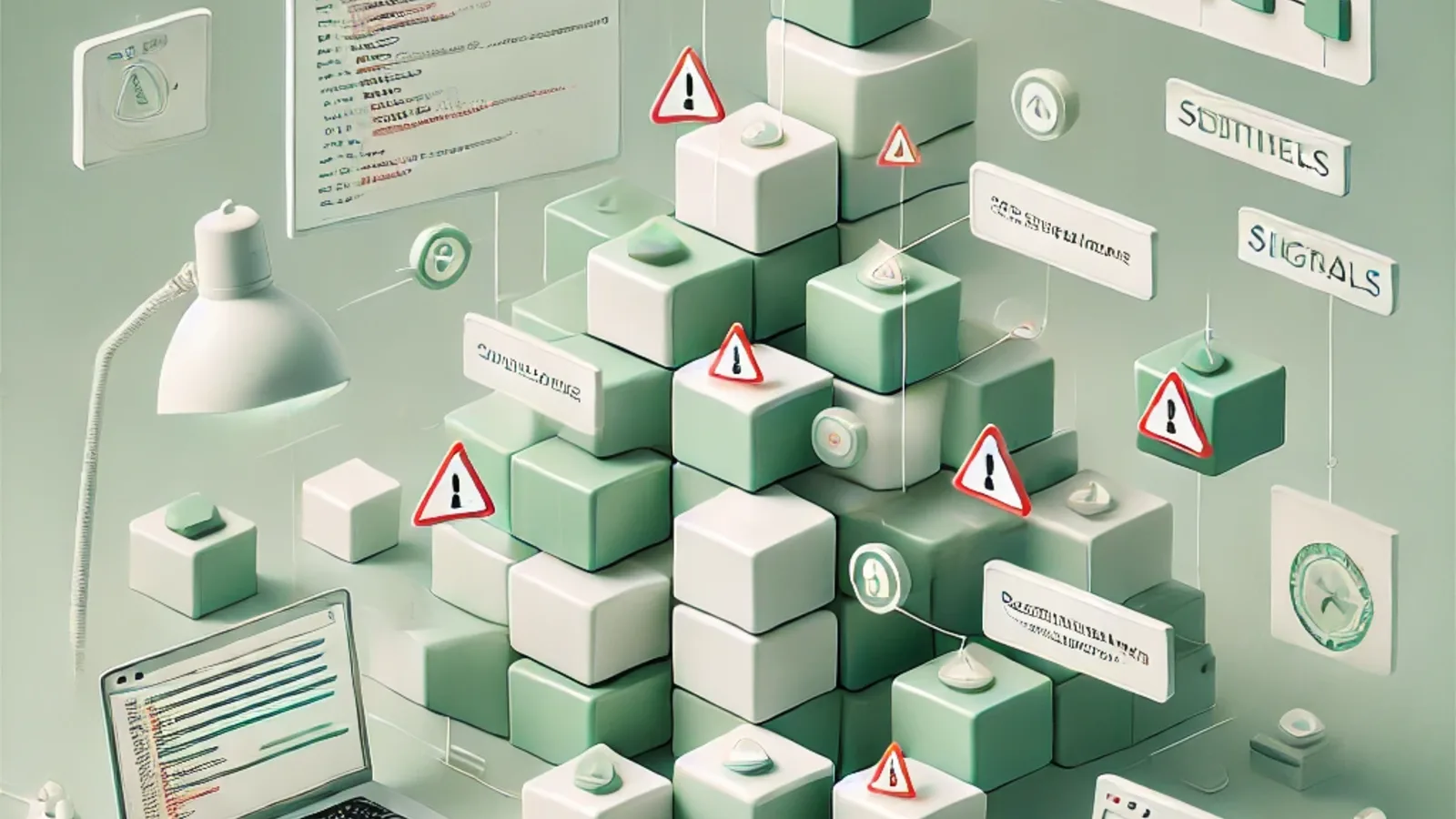
Many software projects do not become hard to maintain because of a single wrong choice. The real issue usually comes from the accumulation of many small decisions made without a clear structure to hold them together.
When growth is not planned
At the beginning of a project, it is normal to prioritize speed. Early features need to ship quickly to validate the idea and move the product into a usable state.
The problem starts when the system keeps growing without rethinking its structure. Early decisions, which may have been acceptable for a small project, remain in place even as the product becomes far more complex.
Over time those choices turn into constraints. System growth is no longer matched by growth in its architecture.
The weight of dependencies
One of the clearest signs of a system that is hard to maintain is excessive coupling between its parts. In a well-structured system, modules have clear responsibilities and communicate through defined interfaces.
When dependencies become too tight, the system loses flexibility. Components depend on specific implementations, business logic gets scattered, and the frontend becomes too tied to the internal shape of the backend.
At that point even relatively small changes can trigger unexpected effects in other parts of the project.
The silent duplication of logic
Another common phenomenon is duplicated logic. At first it can feel like a harmless shortcut: copying a function or repeating a query solves a specific problem quickly.
Over time, however, these duplications accumulate. The same business rule appears in multiple places, often with small variations introduced along the way.
When that rule changes, every copy must be updated. If one is missed, the system starts behaving inconsistently.
When data does not reflect the domain
Many difficulties also emerge from data structure. The database is the memory of the system, and the way it is organized directly affects the product's ability to evolve.
If the data model does not properly reflect the real domain, every new requirement becomes harder: adding relations, introducing features, or keeping consistency across different parts of the system becomes more complicated.
When data is not aligned with the domain, application code tends to compensate with increasingly complex logic. The result is a more fragile and less predictable system.
Complexity is inevitable, chaos is not
Every software project becomes more complex as it grows. Complexity is a natural consequence of product evolution and changing user needs.
The real issue is not complexity itself, but how it is organized. Clear architecture, strong separation of responsibilities, and periodic structural review allow a system to evolve without losing coherence.
In other words, complexity can be managed. Chaos is what happens when design is neglected over time.
Conclusion
A software project becomes hard to maintain when it grows without a structure capable of supporting it. The goal is not to eliminate complexity, but to give it a shape that remains understandable over time.

Keep reading